Delight @ Keio SFC-RG

Keio University Nakamura Joint Lab. Delight Group

Delight group is a research group of the Nakamura Joint Research Group at SFC, Keio University, focusing on decentralized and distributed systems. With the spread of the Internet, issues arising from the reliability of information circulating in cyberspace are becoming apparent rapidly. In collaboration with the Data Architecture Lab at Keio Research Institute at SFC, we are working on solving issues of decentralized and distributed systems and on research activities in various application fields.

We are always welcome to new members.
If you are interested in our research, please check the following page.

Research Topics:

Decentralized and Distributed Systems

  • Digital Identity
  • Verifiable Data Architecture
  • Network Architecture

Digital Identity

Digital identity is a set of information in cyberspace that is associated with entities in the real world. Technologies related to digital identity play a significant role as a bridge between cyberspace and physical space. We are discussing and researching the architecture of digital identity infrastructure and the feasibility of self-sovereign identity from the viewpoint of "trust."

Verifiable Data Architecture

To developing digital civilization, It is essential to ensure the reliability of the information we communicate over the Internet. In particular, it is important to verify the authenticity of data that describes certain information and to efficiently process the described information (machine readability). We are researching system architectures that apply data models based on Verifiable Credentials and Decentralized Identifiers, which W3C is standardizing.

Network Architecture

Knowledge of computers and networks is essential when discussing digital identities and verifiable data architectures, including distributed systems, network security, and communication protocols. At Delight, we build our network systems from physical machines for research purposes, and they also build and operate virtual machines in the network to test and experiment with software they have created. Students can acquire knowledge of both hardware and software.

News

A paper authored by Rintaro Inagaki and his colleagues from our group received a Best Paper Award at the Computer Security Symposium 2025.

Feb 16, 2026
A paper authored by Rintaro Inagaki and his colleagues from our group received a Best Paper Award at the Computer Security Symposium 2025.

A paper authored by Yuma Soga and colleagues from our group received a Paper Award at DICOMO 2025.

Jan 17, 2026
A paper authored by Yuma Soga and colleagues from our group received a Paper Award at DICOMO 2025.

Riku Mochizuki, a member of our group, presented his research at the Trustchain workshop at IEEE ICBC 2025.

Jun 6, 2025
Riku Mochizuki from our group presented his research on the WARASHIBE protocol at the Trustchain workshop of IEEE ICBC 2025.

Our new journal paper by Ryosuke Abe, project research associate, et al. is published in IEEE Access

Jan 6, 2025
Our new journal paper by Ryosuke Abe, project research associate, et al. is published in IEEE Access

Ryosuke Abe, project research associate, won the Best Paper Award at the Asian Internet Engineering Conference (AINTEC) 2023.

Dec 22, 2023
We are pleased to announce that Ryosuke Abe, a project research associate in our group, presented a paper at the Asian Internet Engineering Conference (AINTEC) 2023 and won the Best Paper Award. In this study, they measured the parties' attitudes in the order transaction on the blockchain-based escrow service by the visualizing transaction history, and they designed an incentive mechanism to make the parties behave honestly.

Delight will exhibit at SFC Open Research Forum 2023

Nov 24, 2023
Nakamura Joint Laboratory Delight Group will exhibit at SFC Open Research Forum 2023.

Announcement of reforming a new group "Delight": Kumo and Bcali are now togther.

Sep 27, 2023
We are pleased to announce that Kumo and Bcali, which are parts of SFC-RG groups, have been merged into a new group, "Delight", following the developmental dissolution of both of them. The new group "Delight" will continue the activities of Kumo and Bcali, especially focus on research and development related to "distributed systems" and "decentralized systems".

Publications

A Conceptual Model for Claim Validation Based on Cryptographically Signed Data

In this paper, we propose a conceptual model for claim validation based on signed data while clarifying the gap between validation and verification. As various activities are conducted via the Internet and the Web, verifying information and its originators is essential for countermeasures against threats, such as spoofing or falsifying an achievement. These discussions utilize cryptographically signed data, which includes a digital signature that allows a recipient can confirm the authenticity of the source using cryptographic techniques. In applications that utilize signed data to represent a claim, the recipient judges whether the claim is valid to avoid misidentification of the claim. However, the standards for digital certificates, such as Verifiable Credentials, do not cover the validation of the claim represented by the certificate, including the truth or falsity of the claim. Considering that verifying a signature does not directly indicate the validity of the claim, the gap between verification and validation should be clarified to cover the validation of the claim. We then hypothesize that the gap is the presence or absence of the validator’s criteria, and review the definitions in two standard documents to confirm our hypothesis. We then propose a conceptual model for claim validation that utilizes signed data. In our model, a validator, who is a recipient of the claim, defines a validation policy to represent the validator’s criteria. We also discuss a communication model between the claimant, who is a originator of the claim, and the validator. For claims that the validator cannot directly validate, we introduce an additional model that involves a certifier that the validator trusts. We analyze the applicability of our model through three use cases, and conclude that our models are applicable. Based on our model, we anticipate exploring several scenarios to validate diverse claims using signed data.
Ryosuke Abe,Shigeya Suzuki,Osamu Nakamura
IEEE Access volume: 13
Dec 2024

Mitigation of Seller and Buyer's Dilemma with Transaction History and Escrow

In this paper, to estimate the risk of economic loss incurred by both parties in production order transactions, we propose a scheme that enables escrow and confirmation of the results without relying on a third party. In such transactions, both parties risk incurring economic losses if the other party behaves dishonestly. Generally, the risk can be reduced with an escrow service provided by a trusted third party. However, there is a risk of fraud by the third party; in some cases, the third party may not be available for the buyer or seller. Several existing schemes utilize fair exchange and blockchain to disburse the deposited payment upon the delivery of specific data. However, in production order transactions, some cases cannot be handled only by completion of delivery, such as disputes that arise when the data does not meet the quality expected by the buyer. In such cases, before the transaction starts, a party would confirm the counterparty’s behavior in past transactions to estimate the risk of a dispute occurring. In this paper, we propose a scheme that records the history of past transaction processes while utilizing blockchain-based escrow and allows future counterparties to confirm the history as a reference for estimating risk. By the opportunity loss that a history of dishonest behavior causes and applying blockchain-based escrow, the scheme motivates sellers and buyers to behave in good faith. We implemented a prototype system on top of Ethereum and verified its feasibility. By expanding the scope of transactions, we expect that it will be possible to determine whether transactions between individuals over the Internet are feasible without relying on a specific escrow service.
Ryosuke Abe,Seiyo Kurita,Mariko Kobayashi,Shigeya Suzuki
Proceedings of the 18th Asian Internet Engineering Conference 2023 (AINTEC '23), ACM
Dec 2023

A System for Selective Disclosure of Information about a Patient with Intractable Disease

To receive effective treatment during emergency response due to seizures or unforeseen accidents, a patient with intractable diseases must disclose information about their disease to an emergency physician. If the patient loses consciousness while traveling, the patient should disclose this information to a companion in advance. However, disclosing this information to a companion is undesirable because the information is confidential. Thus, we propose a system that discloses specific information on intractable diseases only when an emergency physician has verified they possess a medical license. Otherwise, the proposed system only discloses appropriate first aid information. We implemented a prototype of the proposed under the assumption that a physician has a digital medical license based on verifiable credentials (i.e., a standard for digital credentials). With this system, the patient does not disclose confidential information to the patient’s companion but does disclose necessary information to the emergency physician.
Erika Sugita,Ryosuke Abe,Shigeya Suzuki,Keisuke Uehara,Osamu Nakamura
2023 IEEE 47th Annual Computers, Software, and Applications Conference (COMPSAC)
Jul 2023

A new scheme combining zk Rollup on top of Optimistic Rollup to make transactions cheaper without compromising security

Transaction processing capacity limits the utility of Ethereum, one of the most well-known blockchain mainly used as a decentralized application. To enable more diverse applications, it is required to raise the transaction-per-seconds(TPS) limitation to lower transaction costs without compromising security as much as possible. To achieve this, several types of research are ongoing. One of the most extensive areas is called “Layer 2.” Layer 2 executes transactions externally on the blockchain, also called Layer 1, and the blockchain secures the correctness of transactions on Layer 2. A major Layer 2 method on Ethereum called “Rollup” is currently in use. Rollup is a mechanism that periodically summarizes Rollup transactions as a batch and writes them to Layer 1, such as Ethereum. A proof system deployed on Layer 1 guarantees the correctness of the result of the Rollup transaction execution. However, writing all Layer 2 transactions to Layer 1 and verifying the proof on Layer 1 still need a certain amount of Gas. Gas represents the amount of computation and storage required to run the program on Ethereum. Since Ethereum fee is Gas mount*Gas Price (Market Value), reducing Gas amount will also lead to a reduction in transaction fees. In this paper, we propose a new scheme called “Rollup on Rollup” to improve the Gas amount efficiency of executing transactions without compromising Layer 1 security. In this scheme, a Rollup operator is writing and verifying transactions on rollup, not on Layer 1, to reduce Gas for the verification. This scheme will allow us to execute transactions cheaper even with a higher transaction processing demand.
Ko Kikuchi
卒業論文
Mar 2023
* Includes papers published in former groups, Kumo and Bcali.

Members

Faculties

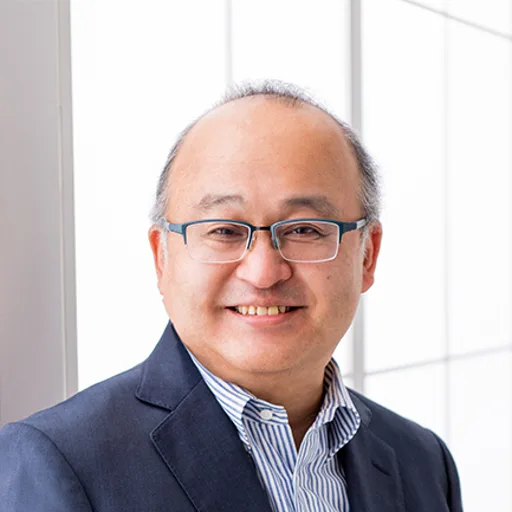
Shigeya Suzuki's portrait

Shigeya Suzuki

Project Professor

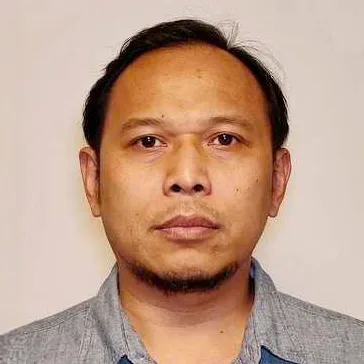
Achmad Husni Thamrin's portrait

Achmad Husni Thamrin

Project Associate Professor

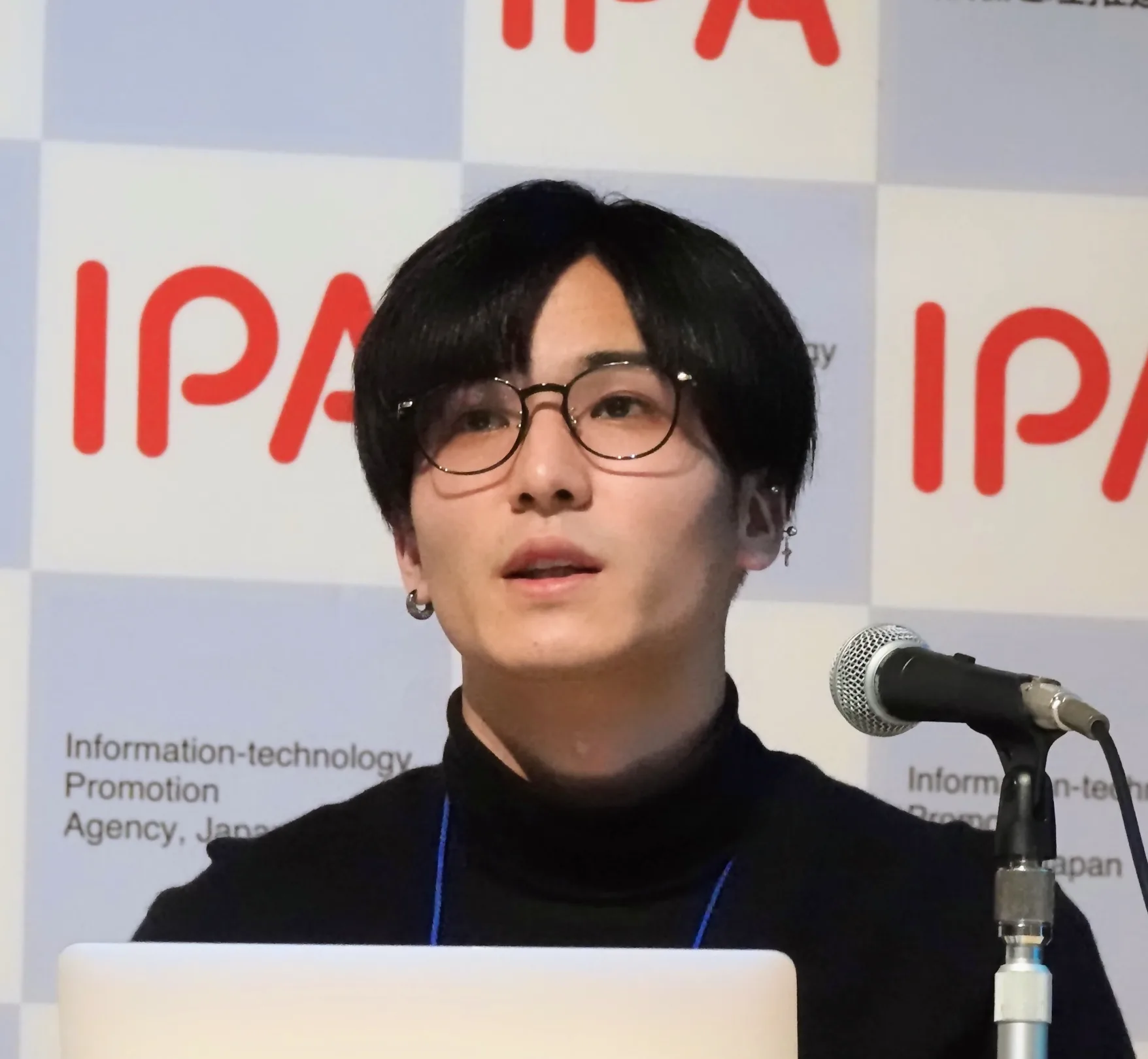
Ryosuke Abe's portrait

Ryosuke Abe

Project Research Associate

Graduate Students

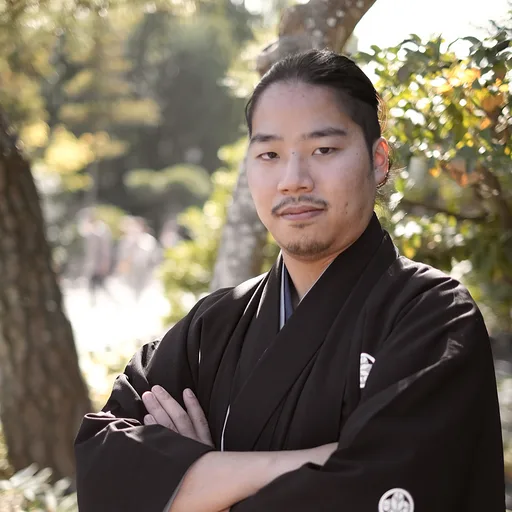
moz's portrait

moz

Master's Student

Responbile Computing
kekeho (Hiroki TAKEMURA)'s portrait

kekeho (Hiroki TAKEMURA)

Master's Student

Distributed/Decentralized System
Fault-tolerant Replication Protocol
Logical Clock
Self-Sovereign Identity
rihib's portrait

rihib

Master's Student

Undergraduate Students

yum's portrait

yum

Group Leader

Digital Identity
Data Security
Data Architecture
uchiyoshi's portrait

uchiyoshi

Vice Group Leader

taru's portrait

taru

Undergraduate Student

Data Security
Sleep...
jamiroq's portrait

jamiroq

Undergraduate Student

Distributed Consensus
tony's portrait

tony

Undergraduate Student

yunative's portrait

yunative

Undergraduate Student

Distributed System
Trusted Execution Environment
♬Music
otter's portrait

otter

Undergraduate Student

Digital Identity
guredora's portrait

guredora

Undergraduate Student

Web System
Accessibility
olatac's portrait

olatac

Undergraduate Student

Digital Identity
tatsumi's portrait

tatsumi

Undergraduate Student

Distributed System
the Internet
hirochi's portrait

hirochi

Undergraduate Student

inaridiy (Rintaro Inagaki)'s portrait

inaridiy (Rintaro Inagaki)

Undergraduate Student

Blockchain
Web System
Cryptography
anchovy's portrait

anchovy

Undergraduate Student

Distributed Consensus algorithms
Quorum-based system
Partially synchronous Model
adely's portrait

adely

Undergraduate Student

Distributed System
hisame's portrait

hisame

Undergraduate Student

crackerky's portrait

crackerky

Undergraduate Student

mugisus (Masayuki MINATO)'s portrait

mugisus (Masayuki MINATO)

Undergraduate Student

Web System
Web Application
Accessibility
emily's portrait

emily

Undergraduate Student

Distributed System
Cryptography

Contacts

5322 Endo, Fujisawa, Kanagawa, Japan; Zip: 252-0882
Delta build. North, Keio University SFC
We have regular meetings at ΔN111 every Mon 2nd and Thu 4th-5th period during the fall semester in 2025.
© 2023 Keio University Nakamura Joint Lab. Delight Group